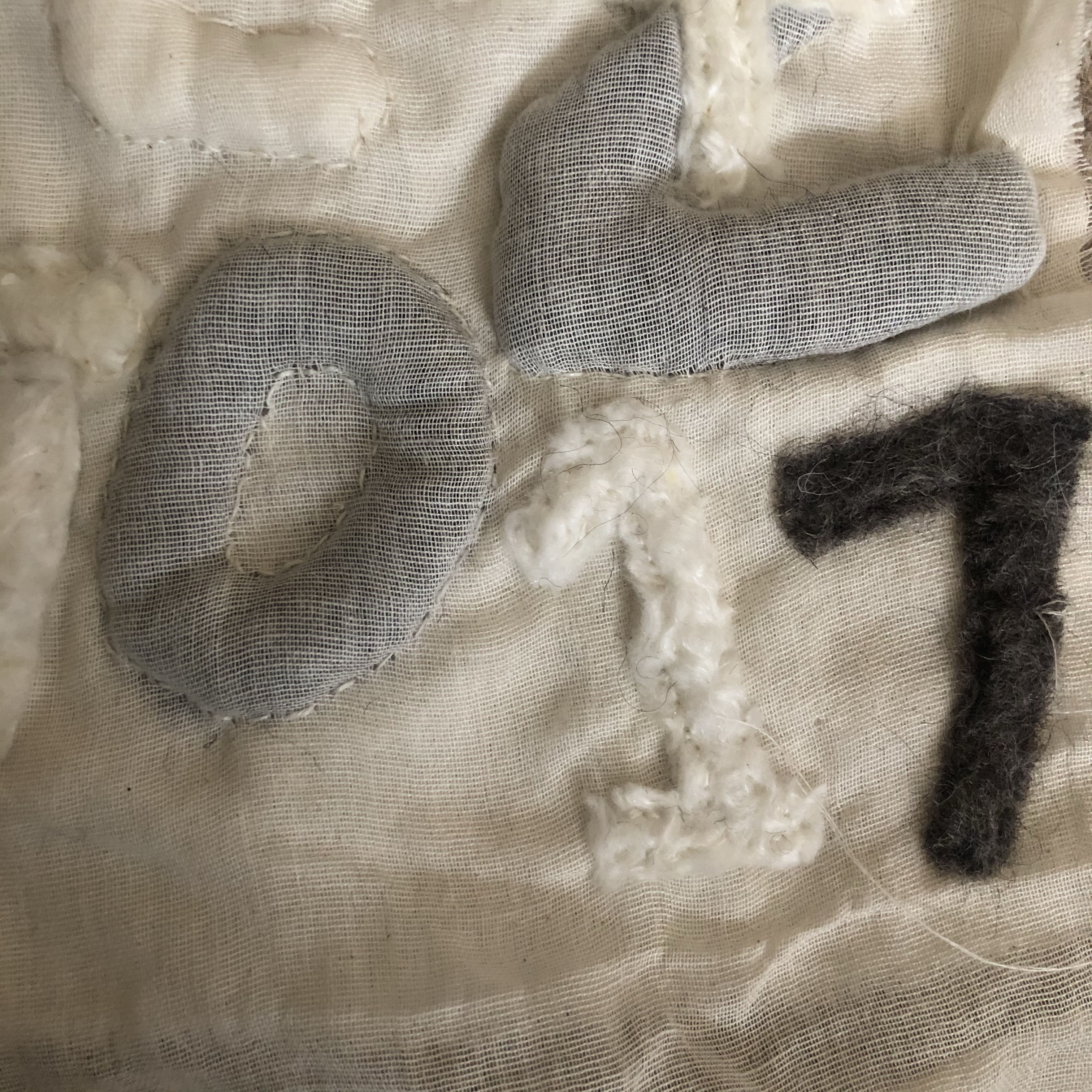
For this lesson I cut out number and letters from the plain felted sheets that I’d created in my Wet Wool Felting class, and used these to create another piece demonstrating shadow trapunto and applique.
The piece consists of two pieces of material, muslin for the top layer and calico for the bottom. For the trapunto method, I ‘trapped’ some felt numbers between the two piece of material and sew neatly around the trapped number using running stitch. It helped to pin down the fabric and the felted numbers/ letters and to use an embroidery hoop, to save the fabric from moving about and to keep it taught.
The numbers/ letters that lay on top of both pieces of material are examples of the applique method. I sew along the edges of each number/ letter, also using a running stitch.

I thought carefully about the positioning of the numbers and letters. I layered the ‘4’ over the ‘2’ in an attempt to make the piece more interesting. I’d say it certainly does make the piece more intriguing but it perhaps breaks the ‘2’ a little too much.
I quite enjoyed the process overall as it was satisfying to watching the surface being raised, however, I found it hard to pick up a rhythm in my stitching and so it took me quite a bit of time.
A Second Attempt at a Trapunto and Applique Composition
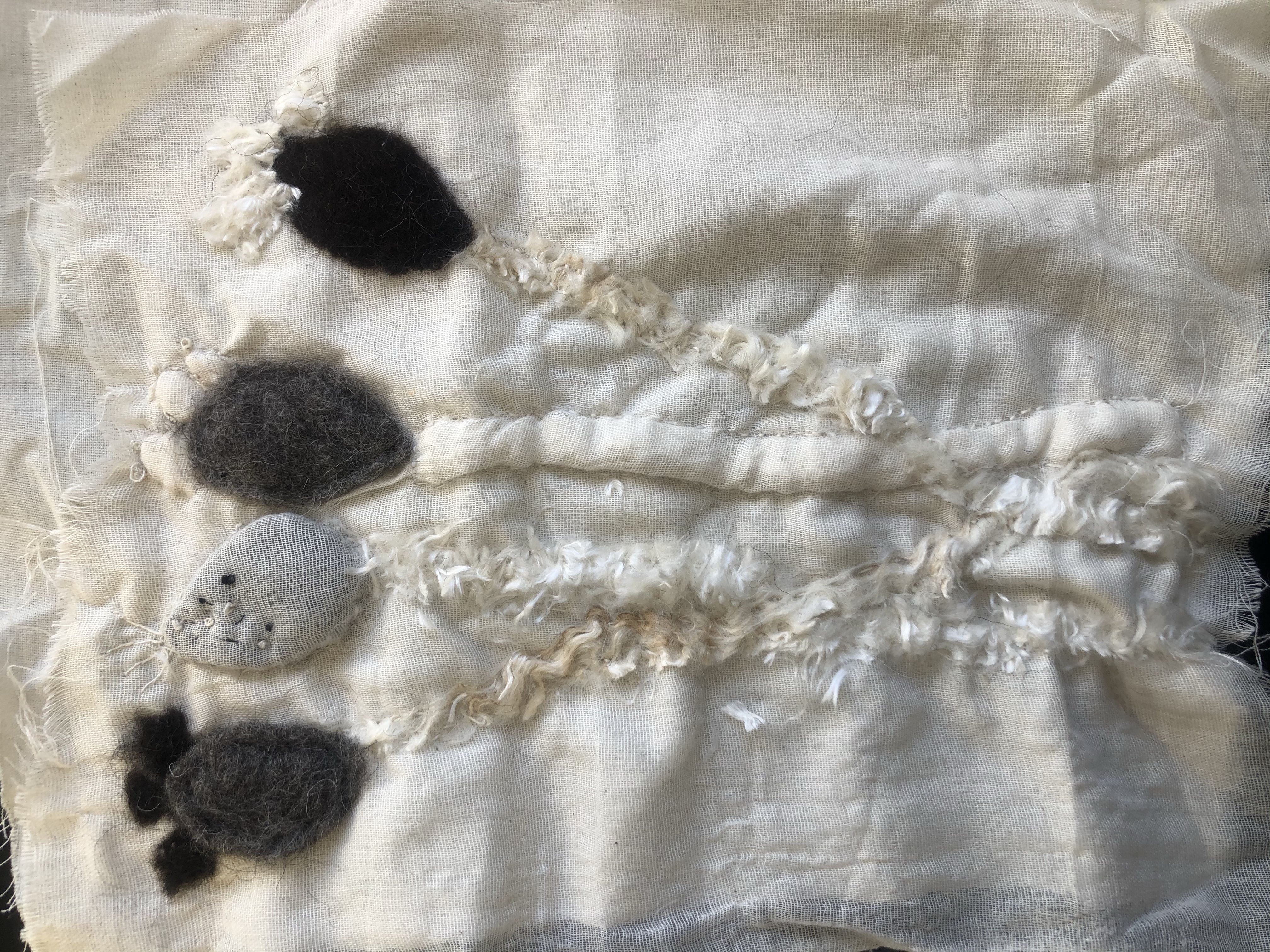

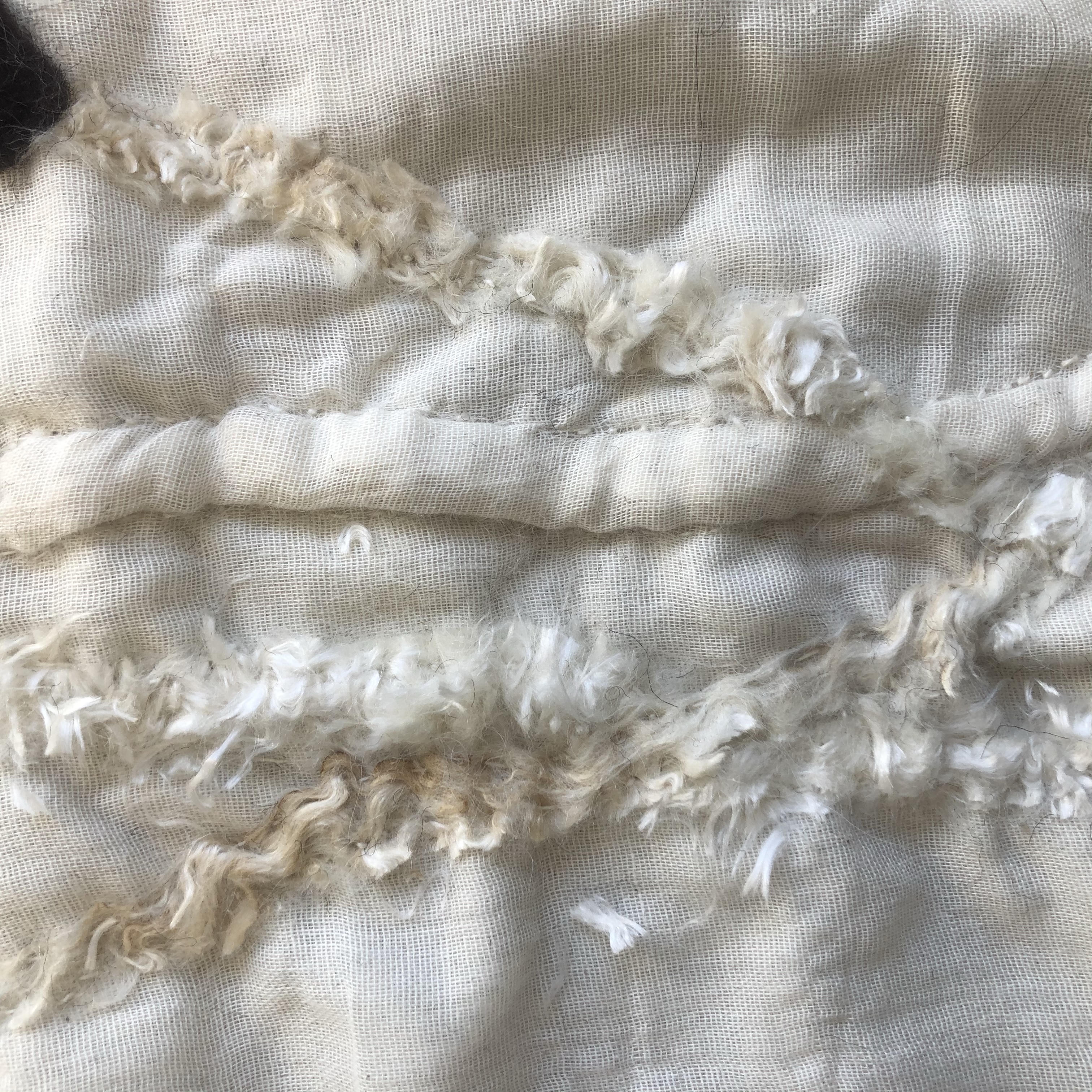
I found this piece quite challenging for the felt was thick and therefore it was hard to mimic the delicacy and elegance of seed heads that I so desired, overall I’m not too pleased with it. However, I must give myself credits for the effort- especially seen as the white felt I used began to come apart as a sew (this time I used a batch of felt made by a class mate and it wasn’t as solid as the one I made and used for my previous trapunto piece).I had aimed to create delicate, thin stalks but due to the felt fraying this way I couldn’t achieve that. I’m not too disappointed with them though, as it is quite a nice effect, and I imagine it’d work well in creating dandelion heads.
 Aisha's Art Blog