
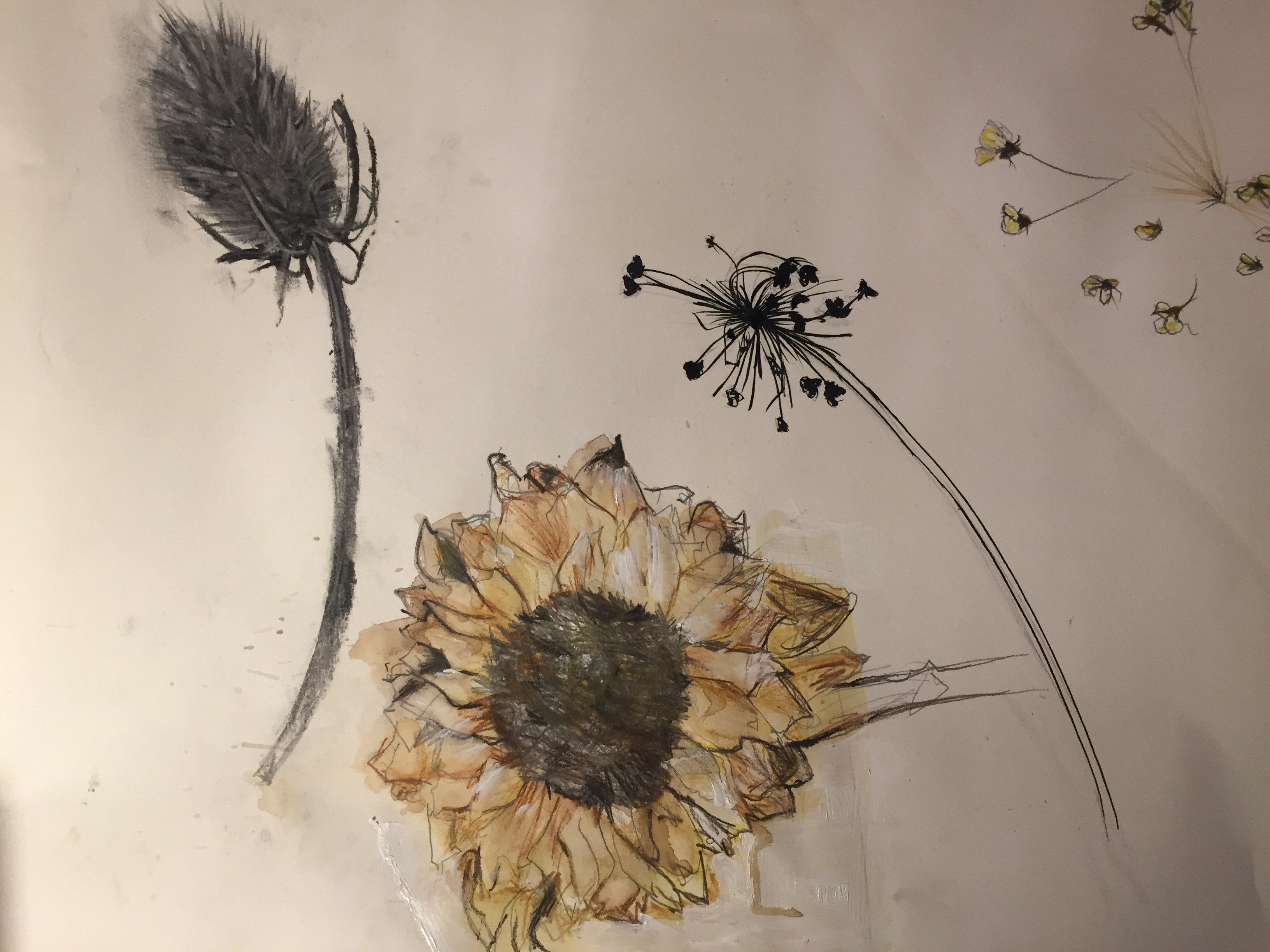
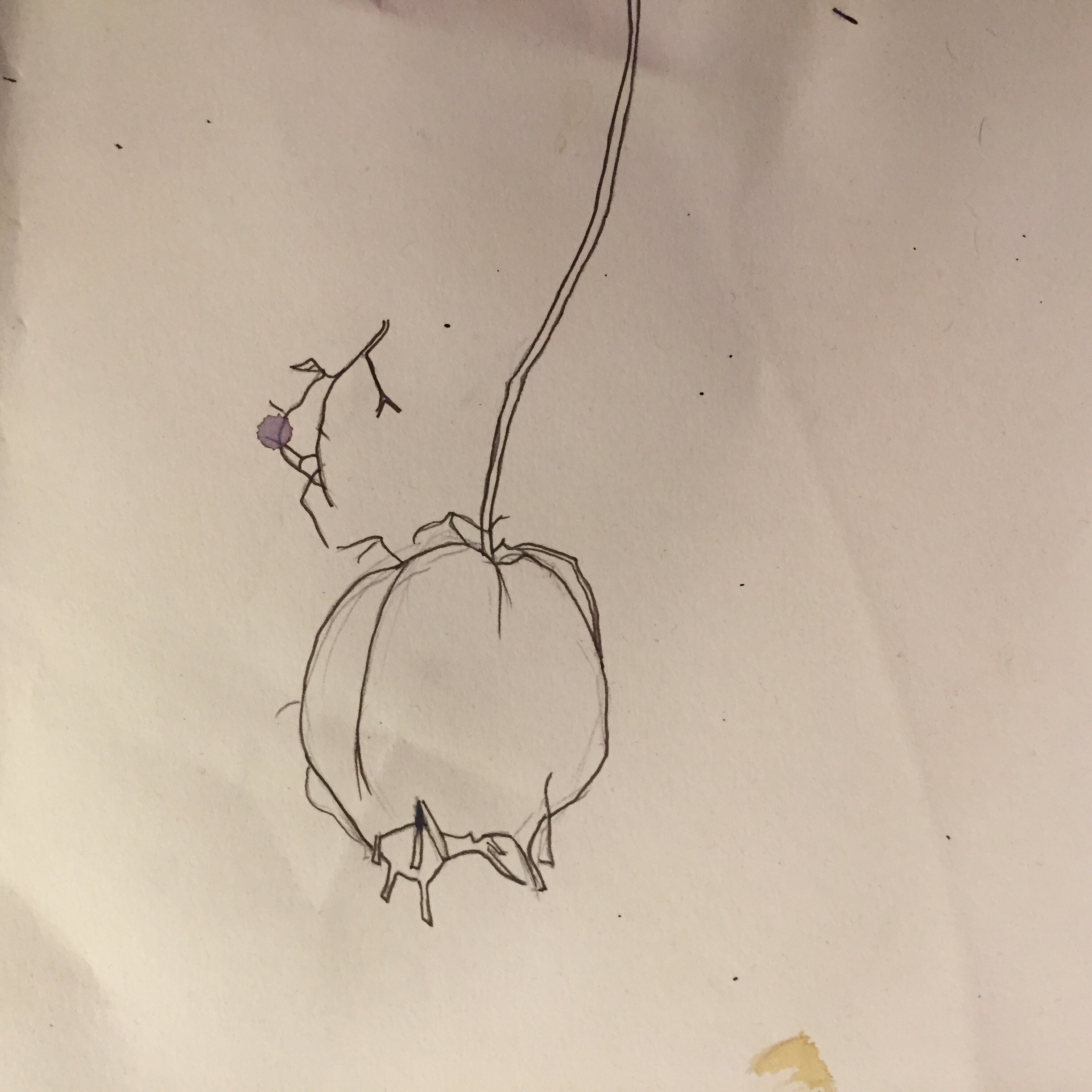
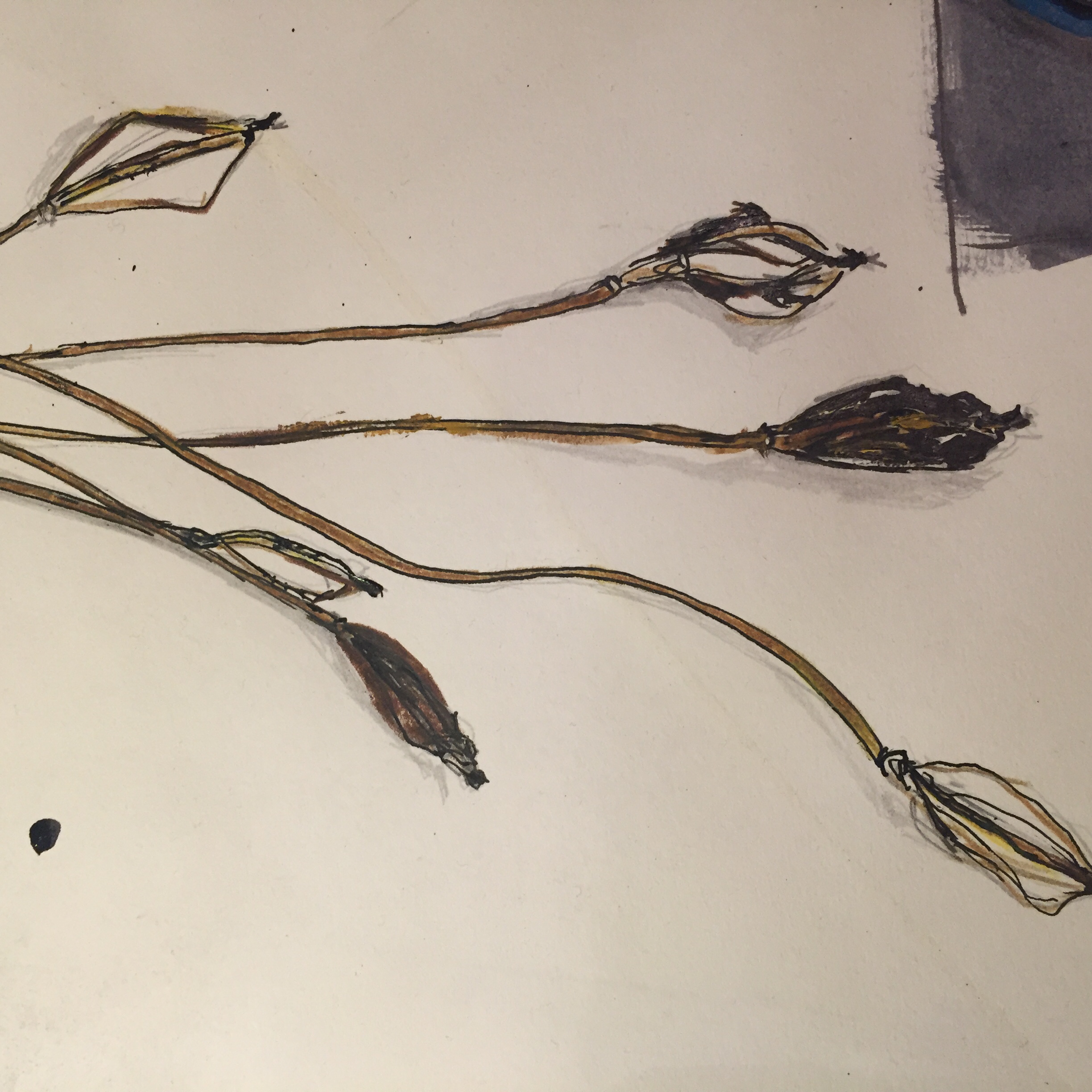
My first textile lesson began with some delicate observational drawings of seed heads, which will be of aid when I come to working on some textile pieces in the next few weeks. For these I used a variety of medias including acrylic, ink, pens and watercolour pencils. I find these mediums work nicely together for each defines one another, for exaple outlining the blue acrylic in one of the seed heads i drew below, ensures the painted aeas stand out and are crisp and bold. It was hard to take in the detail of the seed heads to begin with, but towards the end my eye became more accustomed to looking at their form and I began to draw with more fluidity.
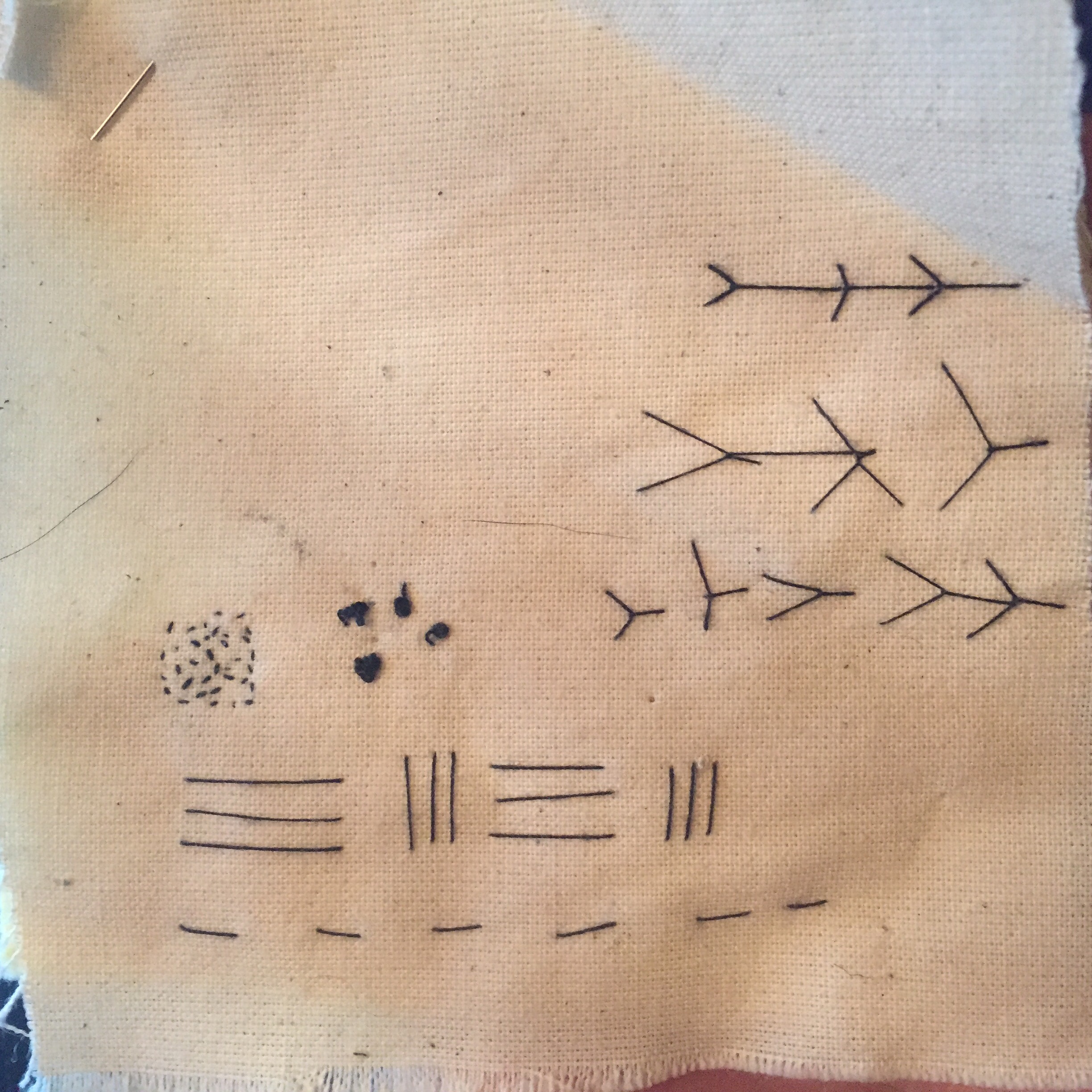
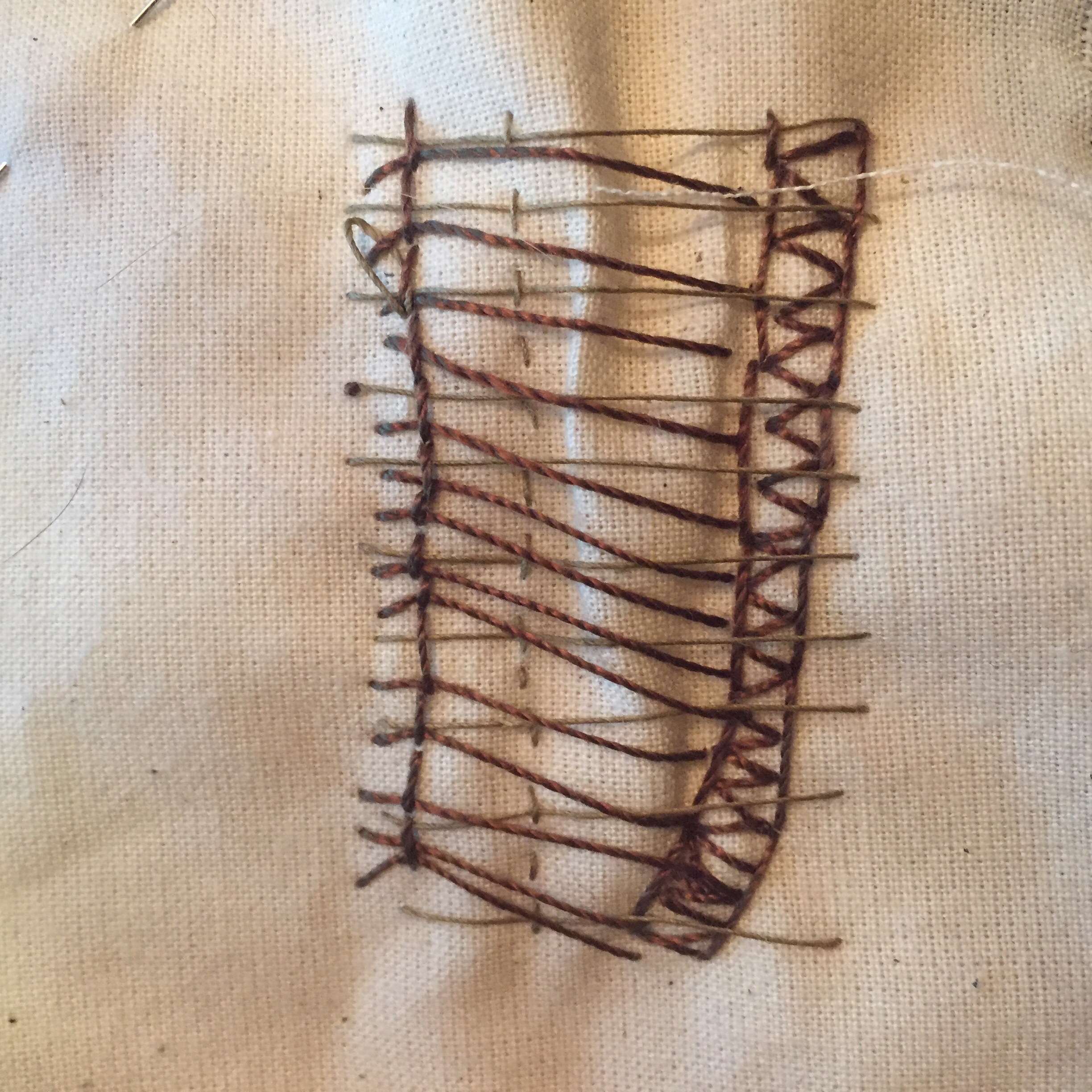
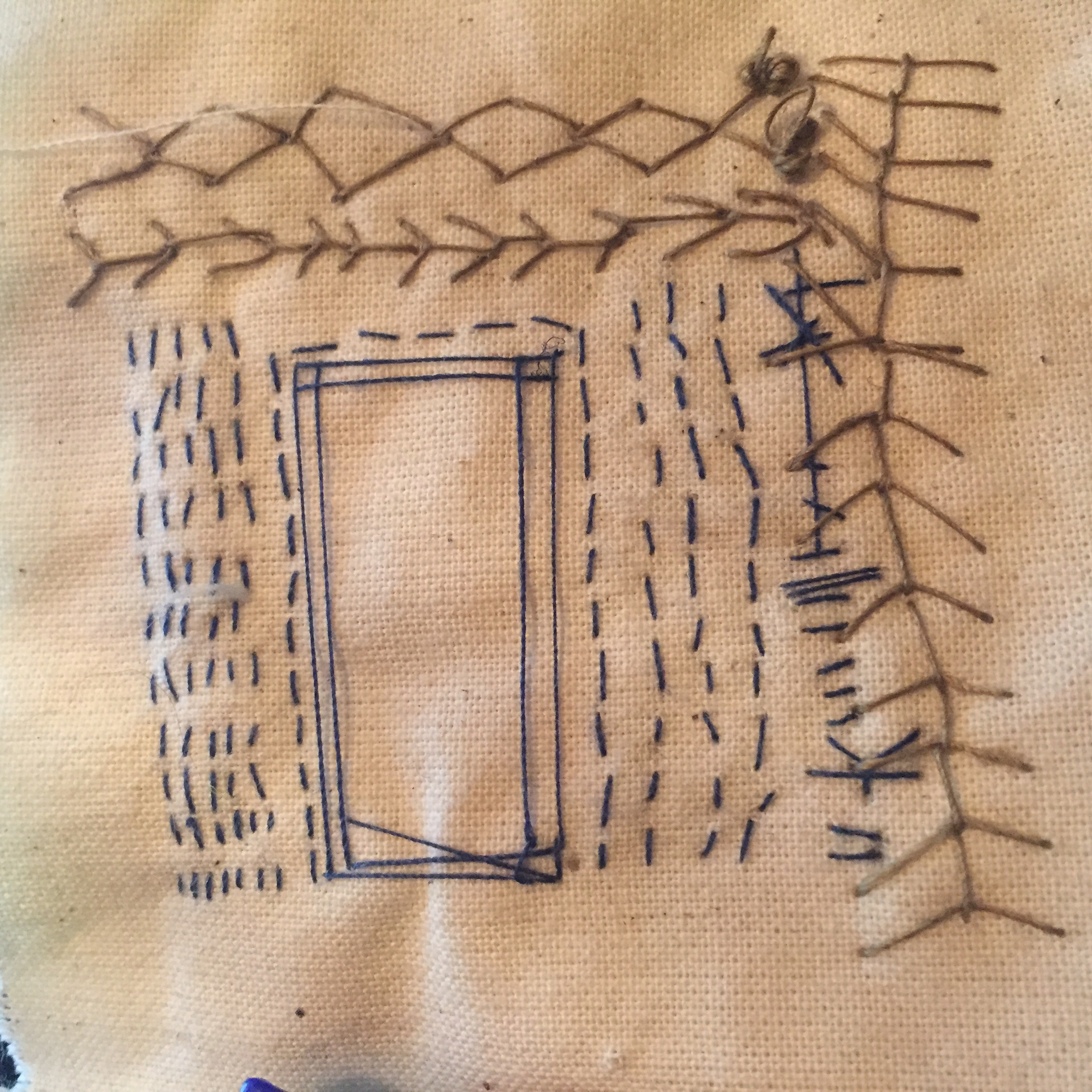
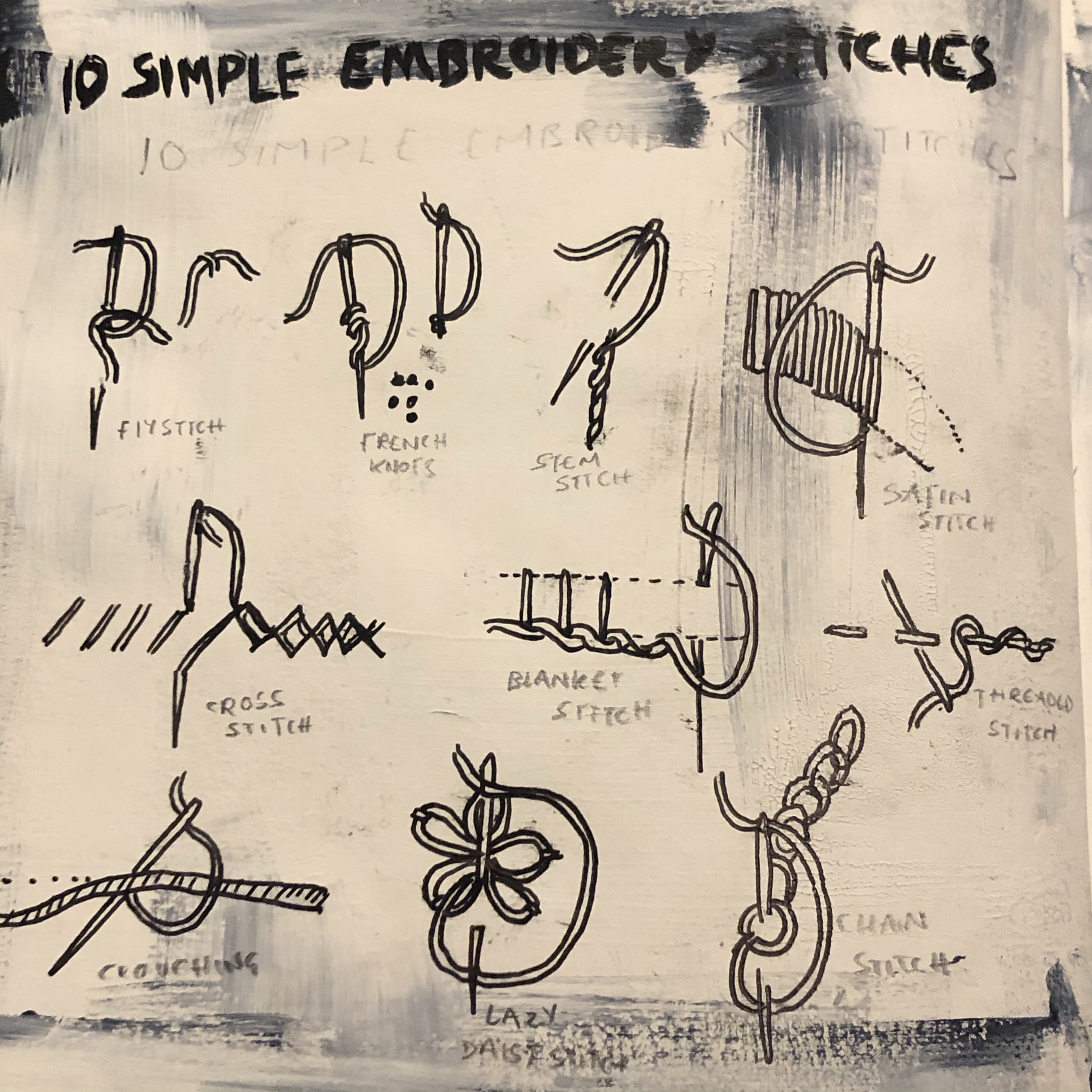
During the second part of the day I was introduced to some hand stich techniques. I’m not so familiar with sewing and it’s not something I am particularly drawn to but I persevered and by the end of the lesson I mastered the fly stitch, french knots, and seed stitch ( i was already familiar with the runningstitch). I then produced severel samples using 3 types of stitch per sample varying their sizes and lengths to create some patterns. I also varied the thread to create different effects. My stitching isn’t precise bt rather a little uneven- by choice, for I prefer my stitch to look loose and wonky, showing character, as opposed to rigid and exact .

Some inspiring stitch artworks


Before discovering Nike Schroeder’s works, I imagined it would be hard to achieve a sense of flow through stitch. I like the way Schroeder leaves threads hanging in her stitched illustrations for not only is it refreshing, but it lends her piece a sense of fluidity and looseness – notably, in a way that is unachievable through using any other medium. The effect of her something I’d like to convey in any stitched pieces I’m required to produce.

Porch appears to have combined several mediums in this piece which, together, create an exciting, livened, surface, which instantly screams to be touched. Her stitching is playful and light and thrives to standout amongst the thick, what appears to be, paint. I don’t particularly like all aspects of this work, in fact I find the piece a little ugly over all but it’s wavering bits of stitch that attracted me.


I am particularly drawn to Tillke Swarz’s embroidery work for she seems to capture oddities that she spies. I like work like this for it tends to give me a little insight into their brain, and sometimes I relate to their work by understanding their oddities – this too is what attracts me to Tracey Emin’s work. The marks Swarz creates with stich appear childlike and some areas of her work are layered which creates an intriguing chaos. I notice too, that her colours are nicely chosen and balanced , they don’t clash, but instead appear soft with the ocassinal bright colour here and there. I specifically like the appearence of the letterig lwttering she includes, I’d like to include stitched lettering in some of my work.

I particularly like that the writing is uneven and messy, it lends the piece a sense of emotion and therefore ensures the words impact the viewer. The bold red stitched contrasts the light airy black hand writing also reinforcing the meaning of the words. The pink of the flowers is balanced by the pink lines and is therefore easy on the eye.


Izziyana Suhaimi uses a combination of embroidery and illustration. I like this effect because the embroidery renders the simple drawing nicely, bringing the piece to life, especially as she uses bright colours. I’d like to perhaps incorporate stitch with drawing myself as a way to define my drawings. However, I’d like to create pieces more lively than Suhaimi as her illustrations appear too stiff in my opinion.
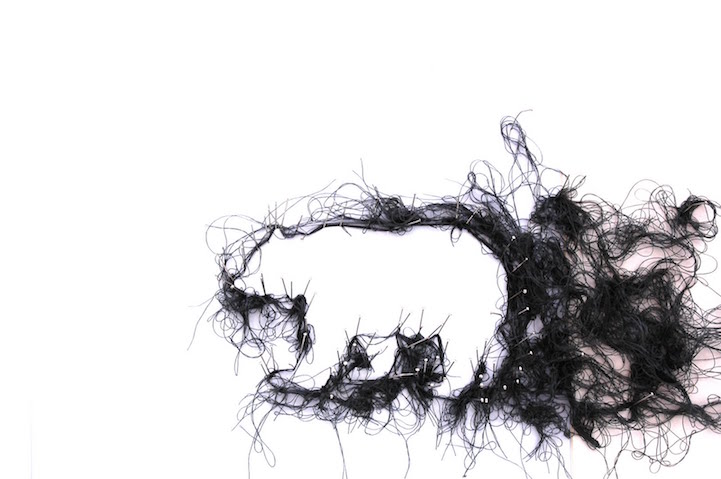
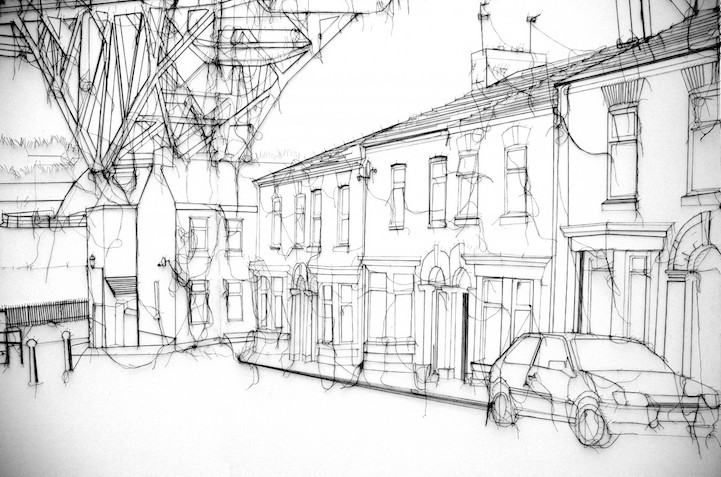
I very much am intrigued by these pieces by Debbie Smyth. She blurs the line between illustration and embroidery. Her charming “pin and thread” pieces are quite raw and structured, and the loose pieces of thread give her work a sense of weight and emotion. She works primarily in monochrome, through this, she has set a mood across her work. “I feel as if I am taking thread out of its comfort zone, presenting it on monumental scale, and creating an eye-catching, and in some cases jaw-dropping, effect,” the artist says.

I especially like the way Smyth directs the eye to the figures in these piece by working around them with clumped, untamed stitch.

